A History of Inserts
The insert card was invented halfway through the junk-wax era. By the end of that era, the insert had killed the era it grew up in. Walk it in order. Every section builds on the one before.
The Subset Era
Before there was a chase
You opened a 1985 Donruss pack knowing exactly what you were getting. Diamond Kings came out of the pack at the same rate as everything else, one every fifteen cards or so. What made them special was the painting, not the pull. Dick Perez portraits, thick colored borders, the number stamped on the front like a museum plate. Kids sorted them into the top of the shoebox because they looked like art. Nobody was chasing them. The industry hadn't figured out how to make you chase yet. That's the next room.
Donruss Diamond Kings
Twenty-six painted portraits by Dick Perez, one for each team, sitting as cards 1 through 26 of the base Donruss set. Ran every year through the whole era. If a kid asked you what your favorite card was, chances are you named a Diamond King.
Topps All-Stars, Fleer Star Stickers
Themed subsets, printed at the same rate as the base cards and pulled at the same rate too. They looked different, that was the whole trick. The moment kids started sorting cards by which ones were prettier instead of which ones they had duplicates of.
Topps Glossy Send-Ins
Twenty-two glossy cards of the biggest stars, mailed to you if you sent in enough proof-of-purchase points from the wax packs. First time Topps ran a distribution channel that ran alongside the pack itself. Not an insert exactly, but pointing that direction.
The Hologram Revolution
The first modern chase
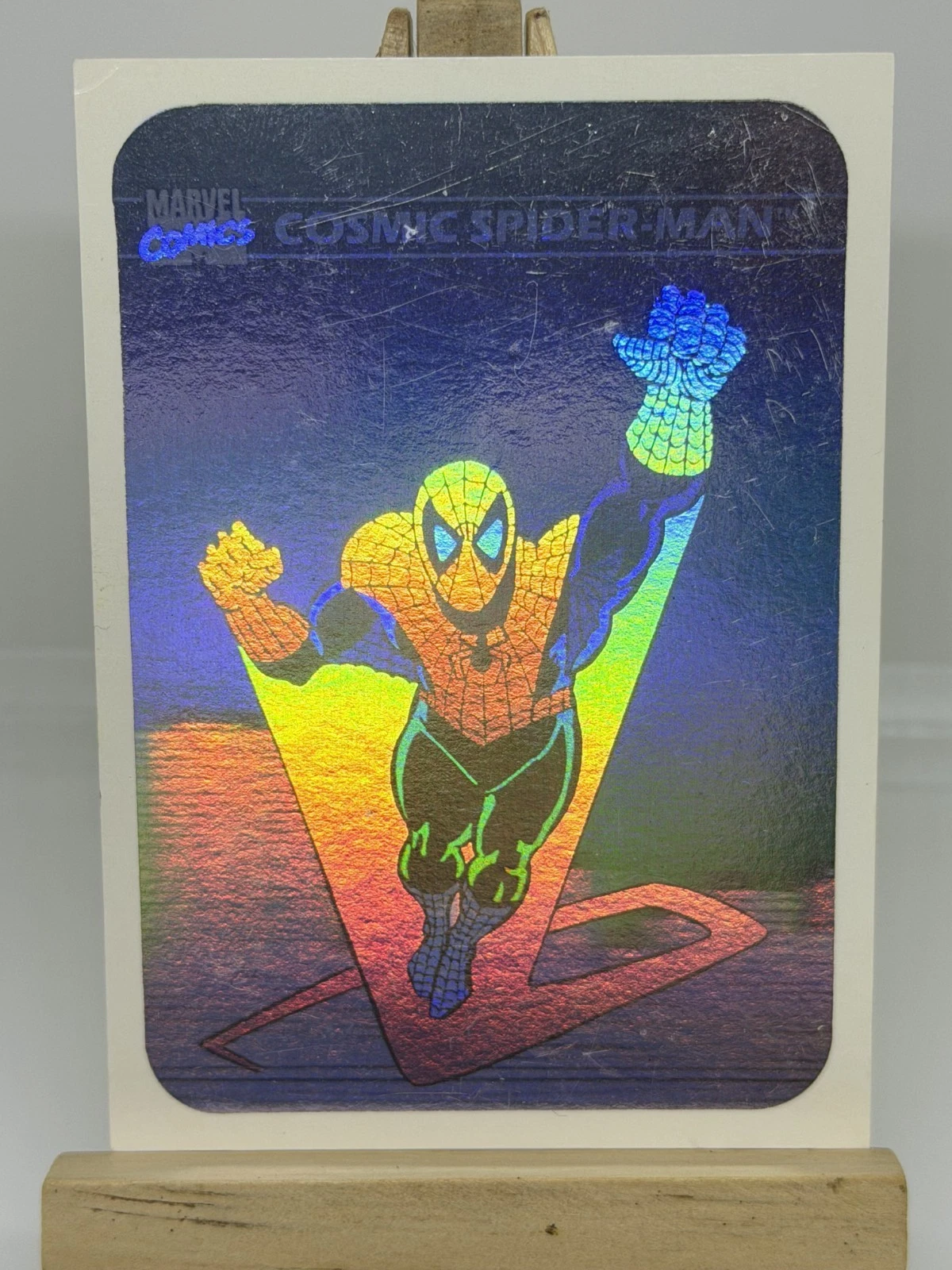
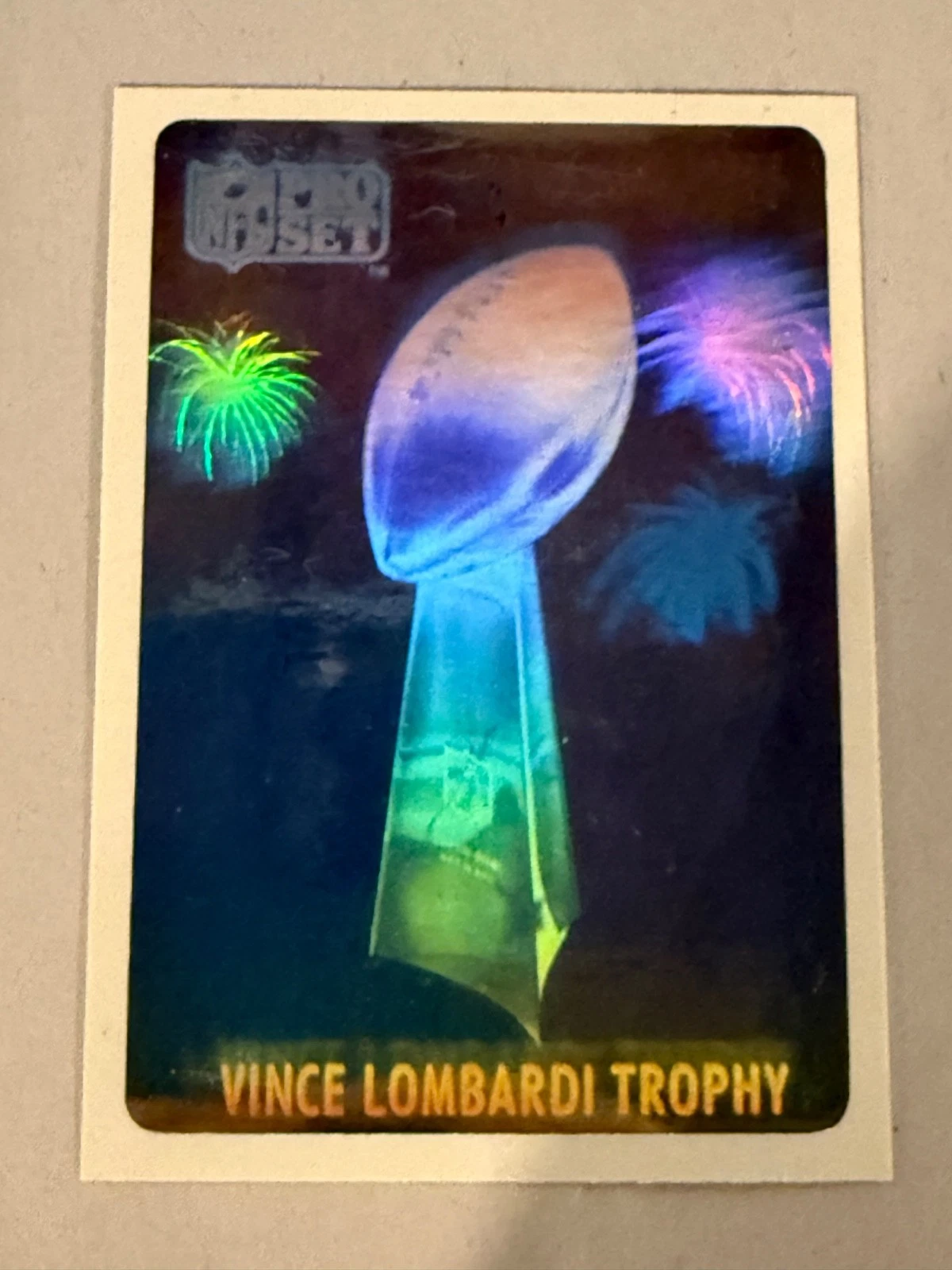
Impel's Marvel Universe holograms shipped one per box of 1990 wax, five cards in the run, Cosmic Spider-Man among them. Each hologram cost Impel roughly forty cents to produce, at a time when a base card cost a fraction of a penny. That is not a number you approve without a plan. The plan was that the hologram was the whole product now. Pro Set did the same thing in football, printing the Vince Lombardi Trophy hologram into 1990 NFL wax, and then in hockey with the Stanley Cup hologram hand-numbered to five thousand copies. Upper Deck was seeding small hologram team logos in 1990 baseball packs at the same time, one per pack, but at that pull rate they were a base subset, not a chase. Both stories run in the same year on different chemistries and different price points. The pack was still the pack. What was in it had changed.
Upper Deck Team Logo Holograms
One small square hologram per team, seeded one per pack of 1990 Upper Deck baseball. Not scarce. Not a chase. But every kid opening Upper Deck that summer saw a hologram fall out, and that is the thing Impel and Pro Set built their premium mechanic on top of a few months later.
The First Auto
Reggie signs the future of the hobby
Later that same year, Reggie Jackson sat down and hand-signed 2,500 cards. He numbered them himself, on the front, in blue Sharpie. Upper Deck salted them at random through the entire 1990 High Series print run and let collectors go find them. If you opened enough packs to pull one, you were holding a signed original numbered by the man on the card. Nobody had ever done that before. Four years later every major manufacturer had an autograph program. Six years later, signed cards were the money in the whole hobby. The blue Sharpie on Reggie's 2,500 is where that money starts.

The Seeded Scarcity Era
Every brand ships a chase
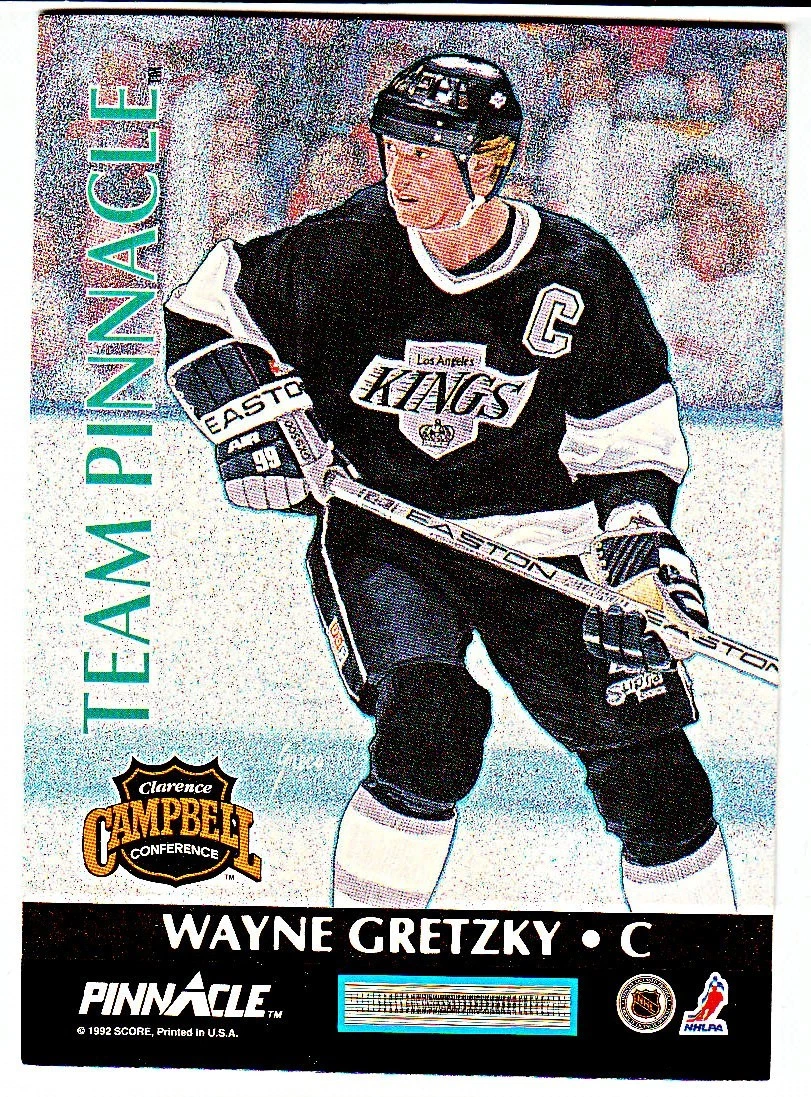
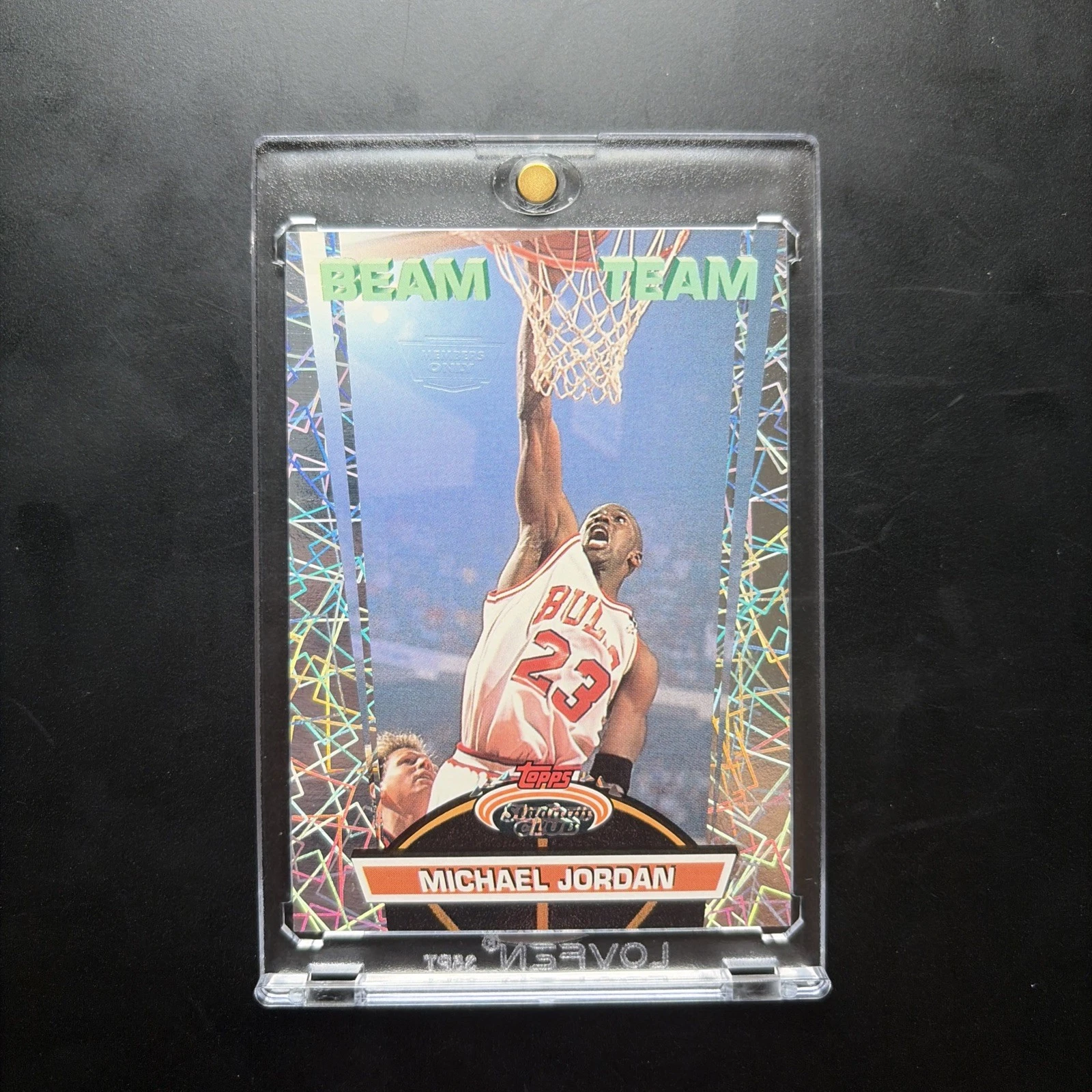
By 1991 every card company was chasing what Impel and Upper Deck had already found. Donruss numbered their Elites to 10,000 copies, at roughly one per case, at a time when a case ran the shop $600. Topps stamped Desert Shield onto 6,800 sets and shipped them to soldiers overseas in Operation Desert Shield, which is why finding a clean one thirty years later is hard. Wild Card printed dollar-value stripes on parallel cards and told collectors to cut them apart with scissors in exchange for smaller redeemable cards, which is as insane as it sounds. In 1992 the Beam Team came out. Twenty-one basketball cards, one every twenty-four packs, all foil, all die-cut, built at a unit cost the base cards would never touch. And then, in the middle of 1992 Leaf packs, Donruss started dropping full-set gold-foil parallels of every base card at one per fifteen. Nobody had made a full-set parallel that hard to pull before. That is the ramp: one Beam Team per twenty-four, one Black Gold per fifteen, and every card in the set had one. The pack was still the pack. But no one was buying it for the base cards anymore.



The Great Divide
The mechanic becomes the product
Two things happened in 1993 that the hobby has never come back from. Upper Deck put out SP: chromium foil fronts printed on stock nobody had used before, priced at three times a normal pack. That summer Topps followed with Finest, and Finest carried a refractor version of every base card in the set at one per nine packs. Pull a Griffey and you had a Griffey. Pull a Griffey Refractor and you had a light-bending object worth more than the whole retail box you cracked to find it. Every parallel the hobby has made since then, every Prizm, every Optic, every Bowman Chrome auto refractor superfractor, runs on the idea Finest introduced that summer. 1993 is where the junk-wax era ends. Everything after was chasing what Finest built. What came before, back when a card the whole neighborhood might have was the thing the pack was built to sell, that is over.
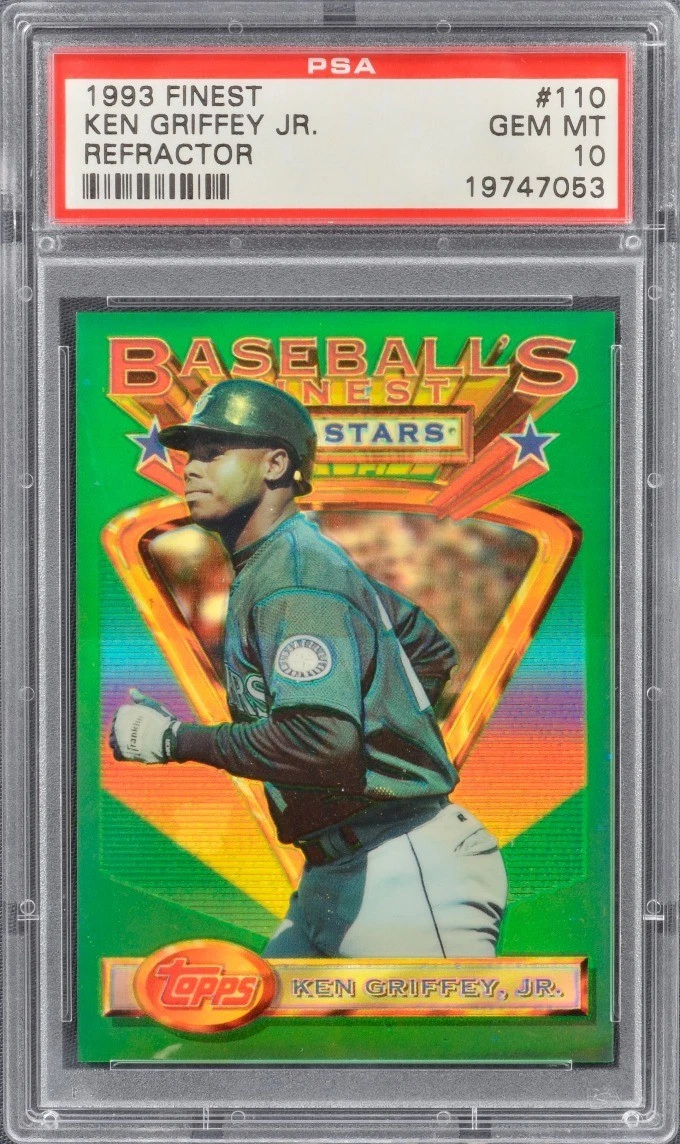

By 1994 the base cards were what came with the inserts. That is not a small change and it is not a graceful one. A card the whole neighborhood might have stopped being the thing the packs were built to sell. That is where the story ends.