The End of the Wax Pack
The trading card pack was wax-coated paper for the first half of the junk-wax era and chromium foil for the last. The material change happened in 1989, and by 1993 it was over. Photos of the actual packs at each turning point, from a sealed 1987 Topps wax to a sealed 1993 Topps Finest foil.
The Wax Era
Kraft paper, paraffin coat, one flat slab of gum
A 1985 Topps wax pack was fifteen cards, one flat slab of pink bubble gum, one cardboard checklist, and a wax-coated kraft paper wrapper heat-crimped on both ends. $0.35 at the drugstore. The wrapper was translucent enough at the edges that a kid holding it up to the ceiling light could sometimes read a jersey color underneath. Wax stain on the top card of every pack that made it to a shelf is the fingerprint of the era. Topps, Fleer, Donruss, and Score all used the same material and the same heat-seal machines. Wax was so ubiquitous that 'wax' became metonymy for pack. Nobody said they opened a pack. They said they cracked wax.


The Upper Deck Reset
Foil, heat-welded, twice the price
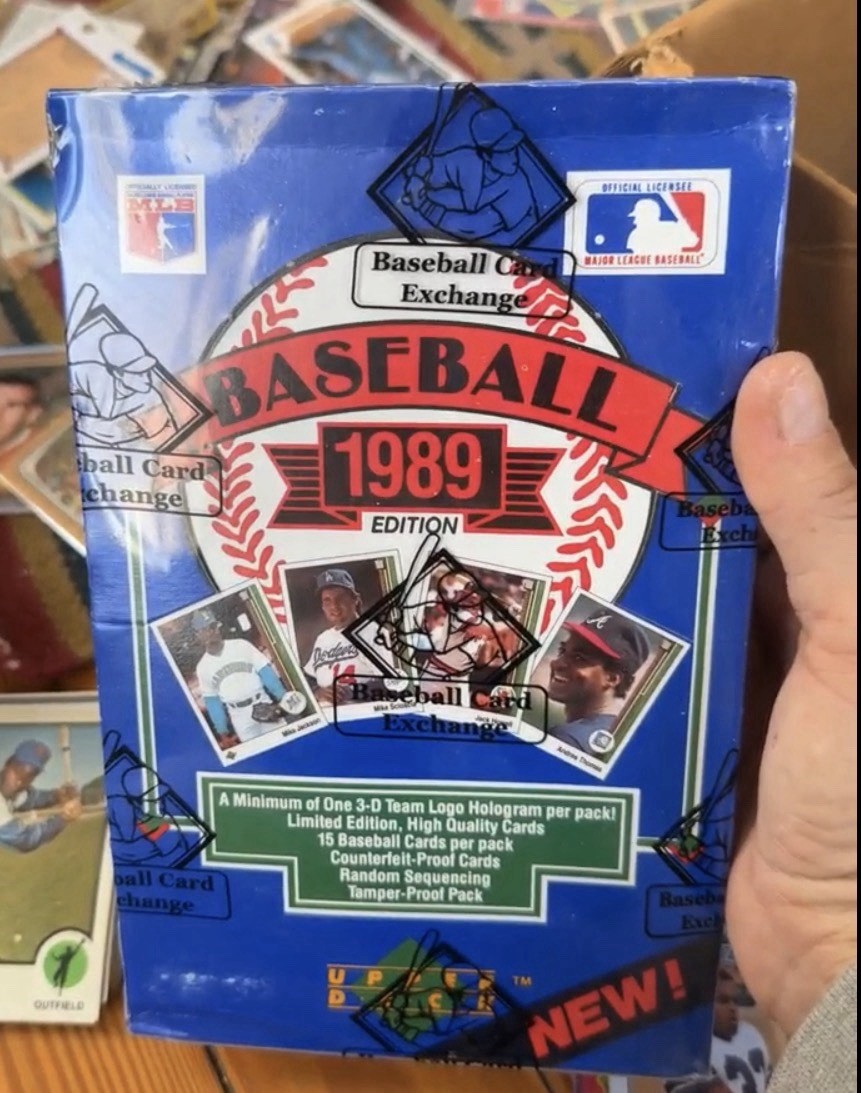
In March 1989, Upper Deck launched with a pack that changed the retail economics of the hobby. Foil. Tamper-evident. $0.99 when a Topps wax pack was still $0.35 to $0.50. The aluminum layer on the foil laminate deforms visibly when peeled, so a pack that has been opened cannot be reliably resealed. That property is what made every hand-numbered auto Upper Deck would seed through the packs the following year credible. If the packs could not be opened and closed without visible damage, the autos inside could not be salted and stolen at retail. The 1989 Upper Deck foil pack is where the modern authenticated chase market physically begins.
The Foil Arms Race
Every premium brand goes foil
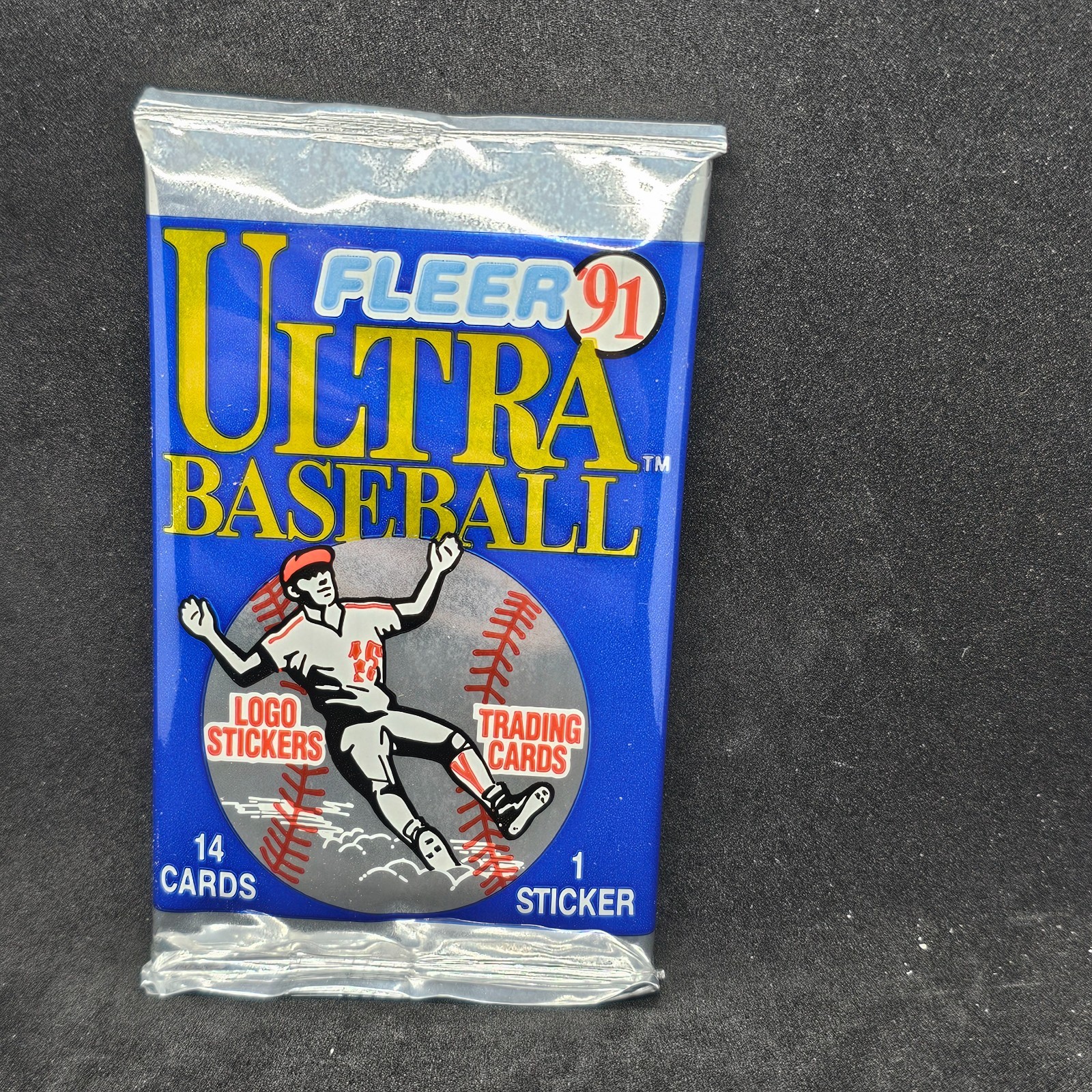
Within two years of Upper Deck's launch, every major manufacturer shipped a foil-packaged premium tier. Fleer Ultra in 1991 at $1 a pack, foil pack and foil-front cards. Donruss Studio in 1991, Topps Stadium Club in 1991, Score Rookie & Traded in 1991, Bowman going foil for its premium series. Base products (Topps base, Fleer base, Donruss base) stayed in wax paper at $0.50. Every new brand extension went foil at $1 or more. In 1991 Topps quietly removed the gum from its wax packs after complaints that the gum stain was destroying centering grades on top cards. What remained was a thinner wax paper wrap still crimped on both ends, still called a wax pack by everyone in the hobby, but no longer the material that had defined the format for four decades.
The End
SP at $2.99, Finest at $4.99, wax retires
Two 1993 releases finished the wax era. Upper Deck's SP shipped in a chromium foil pack at $2.99, with chromium foil card fronts, aimed at the collector who would pay three times a Topps pack for one shot at an SP Jeter #279. A few months later, Topps Finest shipped in the heaviest foil laminate the industry had ever seen, at $4.99 per pack, with a refractor parallel of every base card seeded at one per nine packs. Both products were engineered from packaging outward: the pack itself was the whole product, and the cards inside were the payoff for opening it. By 1994, Topps was manufacturing more foil-based packs than wax-based packs across its product line for the first time. Wax as the flagship packaging tier is over. Any sealed wax pack from 1993 or earlier is a genuine artifact of the packaging era that ended.


Sealed Wax and BBCE
The unopened box as its own artifact
An unopened 1989 Upper Deck Low Series wax box in original factory shrink wrap sells today for high three to low four figures, depending on condition of the outer wrap and the individual pack seals. That price is not about the cards inside. If the box is opened, the cards will be worth a small fraction of the box price. The value lives in the pack, sealed, unopened, authenticated. The Baseball Card Exchange (BBCE), founded in Illinois in 1989, is the industry standard for sealed-wax authentication. A BBCE-authenticated box carries a case-mounted holographic sticker and a tamper-evident wrap around the original shrink. The practical effect is that a BBCE-authenticated 1989 Upper Deck box trades at a defensible premium over a raw sealed box, because the seal has been examined by someone whose only job is to examine seals. For the full canon of sealed boxes from the era, see the The Sealed Wax.

The cards get most of the attention. What held them was doing work too. Every card that came out of the presses between 1984 and 1993 came out of one of these packs, wrapped in one of these materials, sealed by one of these machines, priced at one of these retail points.
- Baseball Card Exchange (BBCE): authentication standards for sealed vintage wax boxes and packs, in operation since 1989.
- Retail pricing figures for 1985 to 1994 packs drawn from period Beckett Monthly and Krause's Sports Collectors Digest, cross-checked against contemporary hobby-shop archives.
- The 1989 Upper Deck packaging spec (foil, back-hologram, tamper-evident heat weld) is inferred from the packaging itself and Upper Deck founder Richard McWilliam's contemporaneous industry interviews. No formal Upper Deck production manual has been published; the reconstruction here is best-available.